



Laptop Repair vs Upgrade – Which Saves Money?
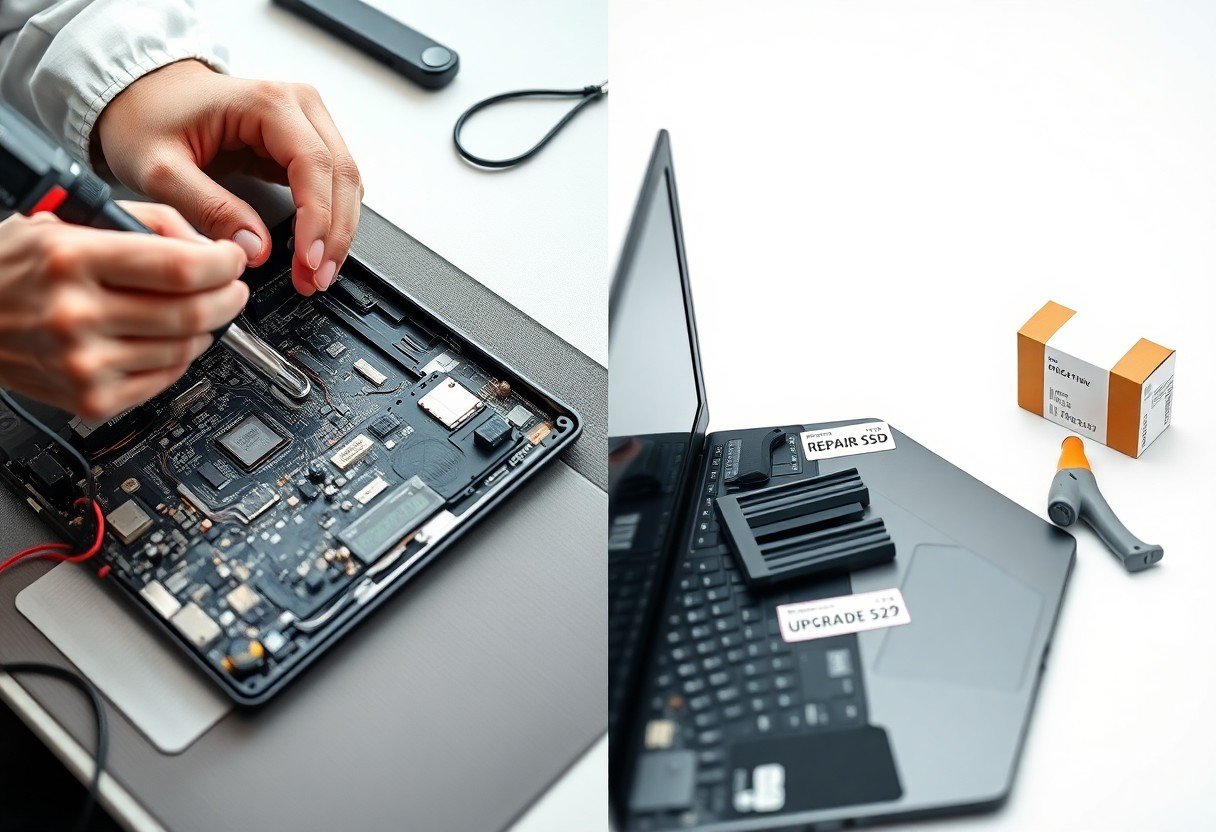
Repair your laptop when a failing battery or sluggish performance disrupts your workflow, but consider whether a targeted upgrade might extend its life more efficiently. A mid-sized SaaS firm found that replacing SSDs in aging machines delayed new purchases by two years, illustrating how strategic choices impact long-term costs.
Key Takeaways:
- A repair might extend a laptop’s life by one to three years, depending on component health, while an upgrade such as adding RAM or switching to an SSD can double responsiveness overnight.
- Replacing a failed hard drive and installing a solid-state drive in a three-year-old business laptop often costs under $150, a fraction of the price of a new machine with comparable build quality.
- Some ultrabooks integrate components like RAM and storage directly onto the motherboard, making upgrades impossible and repairs cost-prohibitive when the screen or logic board fails.
- A mid-sized SaaS firm reported reduced hardware spending by 40% over two years by refurbishing older laptops with new batteries and SSDs instead of full replacements.
- Environmental impact plays a hidden financial role: extending a laptop’s life by two years can reduce its carbon footprint by up to 30%, indirectly lowering organizational overhead tied to sustainability compliance.
The Ailing Contraption
Signs It’s More Than a Minor Glitch
Your laptop boots slower each morning, taking over five minutes to reach the desktop. Frequent freezes during basic tasks, persistent fan noise, and applications that crash without warning signal deeper hardware strain. A mid-sized SaaS firm reported productivity losses when developers faced recurring blue screens, traced to failing storage modules. These are not fleeting hiccups but symptoms of systemic wear demanding attention.
Infusing New Life
You can often restore strong performance by replacing aging components like spinning hard drives with SSDs or adding more RAM. A mid-sized SaaS firm reported smoother operations after upgrading older laptops with 16GB of memory and NVMe drives, extending their usable lifespan by three years. These targeted improvements cost less than half the price of new machines while meeting current software demands.
Counting the Coppers
You weigh each option by examining actual costs, not estimates. A repair might require $120 for a motherboard replacement, while a new mid-range laptop starts at $650. If your current device is four years old, spending over $200 on repairs may not make financial sense. Extending its life by a year through repair divides the cost into monthly savings, but only if no further issues arise. Some users find that upgrading RAM and storage for under $100 extends usability longer than expected, especially with lighter workloads.
The Ravages of Time
Your laptop slows not from a single flaw but from years of accumulated strain-background processes multiplying, storage degrading, memory stretched thin by updates it was never designed to handle. A machine that once launched applications instantly now hesitates, its cooling fan laboring under thermal buildup from dust-choked vents and aging thermal paste. Even routine tasks feel sluggish as the hardware falters beneath software demands it can no longer meet.
The Amateur’s Risk
Attempting a repair without proper tools or experience often leads to further damage, such as misaligned connectors or damaged ribbon cables. You might save on labor costs initially, but a single misstep with a soldering iron or improper static grounding can destroy a motherboard. A mid-sized SaaS firm reported a 40% increase in downtime after staff attempted in-house fixes on critical work laptops. Even replacing a simple component like RAM requires precision, and incorrect installation can render the system unbootable. Professional technicians follow strict protocols, minimizing the chance of collateral damage during disassembly. Your confidence with a screwdriver doesn’t guarantee success when dealing with tightly integrated modern components. One misplaced pry on a glued-down battery can result in a fire hazard or permanent chassis warping. Manufacturers design many current models to discourage user repairs, using proprietary fasteners and adhesives that resist casual intervention. You may end up paying not just for the original issue, but for compounded errors that require extensive rework. A technician’s diagnostic fee often includes a full assessment that prevents misdiagnosis, something difficult to replicate without specialized software and experience. Your time spent troubleshooting is also a hidden cost, especially if the laptop remains out of commission for days. Warranty considerations matter too, as unauthorized repairs can void coverage on parts still under manufacturer protection. You risk more than money when you bypass trained professionals-data loss, safety hazards, and reduced resale value are real consequences. A seemingly straightforward SSD upgrade can become a data catastrophe if the drive is mishandled or improperly seated. Even experienced hobbyists occasionally damage components during reassembly, particularly with compact, high-density logic boards. Your willingness to try shouldn’t override the practical reality of specialized repair ecosystems. Modern laptops are not the modular machines of the past, and each generation grows more resistant to user servicing. You’re not just fixing a part-you’re navigating a tightly engineered system where one wrong move cascades into costly outcomes.
Final Words
You weigh the cost of replacing a failing component against the investment in a new machine, and the answer isn’t always obvious. A three-year-old laptop with a dead battery and sluggish performance may regain usefulness through a RAM upgrade and SSD swap, extending its life for several more years at a fraction of the replacement cost. You might find that your specific usage patterns, the availability of repair parts, and the build quality of your current device tip the balance toward repair. For a mid-sized SaaS firm relying on cloud-based tools, upgrading ten aging workstations with new drives costs less than purchasing new licenses and hardware. You keep your machine longer, reduce electronic waste, and maintain productivity without overspending.
FAQ
Q: How do I know if my laptop is worth repairing instead of replacing?
A: A laptop is typically worth repairing when the cost of fixing it stays below half the price of a comparable new model and the hardware remains capable of handling current software demands. For example, a machine from 2019 with a failed SSD or depleted battery can often be restored to full functionality for a few hundred dollars, extending its life by several years. However, if the motherboard is damaged or the design prevents access to key components, repair becomes less viable. Users should also consider whether the device supports newer operating system updates and sufficient RAM for everyday tasks.
Q: What repairs usually cost less than buying a new laptop?
A: Common repairs like replacing a cracked screen, upgrading storage from a hard drive to an SSD, or installing additional RAM generally cost significantly less than purchasing a new device. A screen replacement on a mid-range business laptop might run $150 to $250, while an SSD upgrade can be done for under $100 including labor. These fixes often restore performance close to that of a new machine, especially when paired with a clean OS installation. In contrast, logic board or GPU repairs on consumer-grade laptops often exceed $300, making replacement more economical.
Q: Can upgrading components make an old laptop feel like new?
A: Swapping out older components can dramatically improve responsiveness and usability. A user with a 2016 ultrabook originally equipped with a 500GB HDD and 4GB of RAM may find the system sluggish with modern applications. Replacing the drive with a 512GB SSD and upgrading RAM to 16GB can reduce boot time from over a minute to under 15 seconds and allow smooth multitasking with a browser, office suite, and media player. Such upgrades are often supported in business and prosumer models, though many ultraportables from the past five years solder components, limiting upgrade potential.
Q: When does upgrading become impractical compared to buying new?
A: Upgrading loses value when the laptop’s processor or integrated graphics are too outdated to benefit from added RAM or faster storage. A machine built around an Intel Core i3-5005U, for instance, will struggle with video conferencing and modern web apps regardless of SSD improvements. Similarly, laptops with non-upgradable CPUs or GPUs, or those limited to 8GB of RAM due to single memory slots, offer diminishing returns. In such cases, even modestly priced new laptops with current-generation processors and efficient cooling provide better long-term performance and energy efficiency.
Q: Are there hidden costs in repairing or upgrading a laptop?
A: Labor charges, part availability, and downtime contribute to the total cost of repair. Some manufacturers restrict access to replacement parts, requiring users to go through authorized service centers that charge premium rates. A simple battery replacement might cost $80 in parts but run $180 with labor. Data migration and software reactivation can also create delays, especially if the hard drive fails unexpectedly. Users opting for third-party repair shops should verify warranty terms and component quality, as low-cost replacements may use refurbished or incompatible parts that shorten the device’s lifespan.
 Previous Post