



Best Laptop Upgrades to Improve Performance
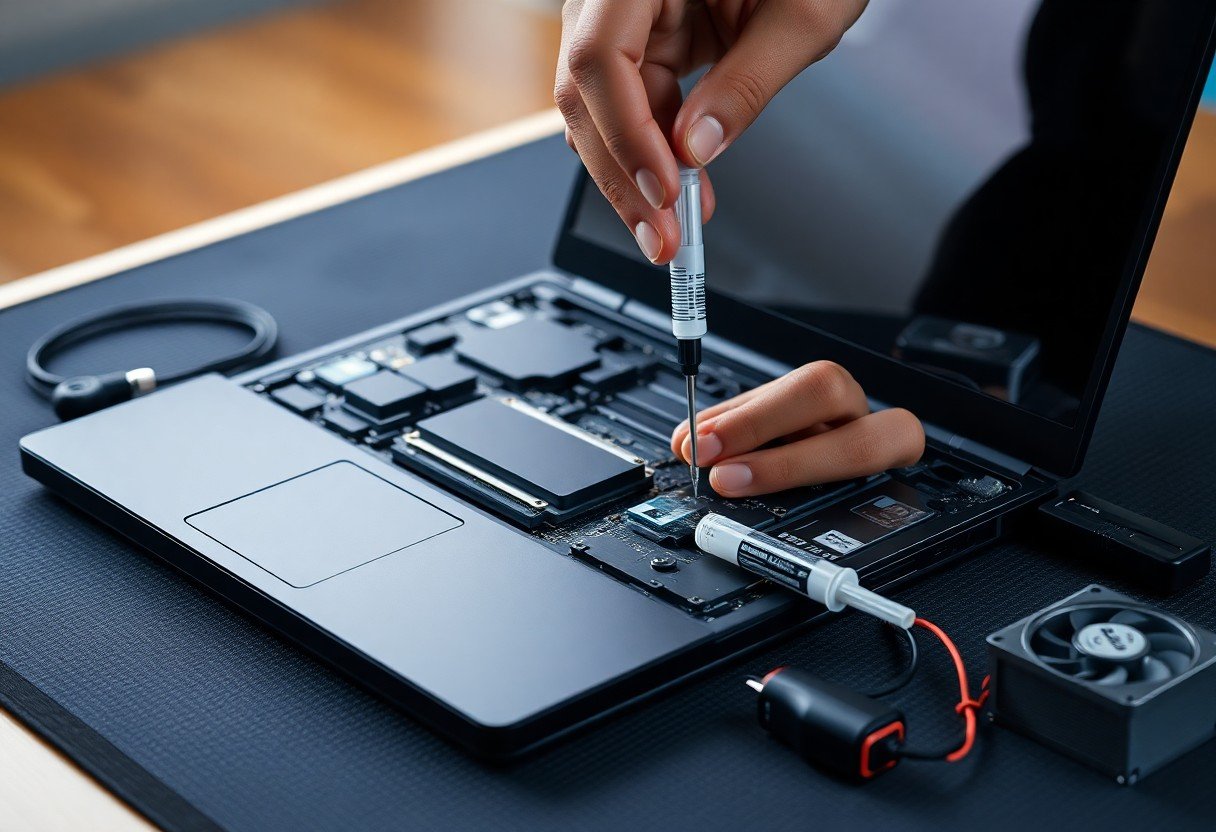
With your laptop slowing down during everyday tasks, you may not need a full replacement. Simple hardware upgrades can restore speed, extend usability, and improve responsiveness. You have options that deliver real gains without overspending. This guide walks you through the most effective improvements you can make right now.
Key Takeaways:
- Adding more RAM can dramatically improve multitasking and system responsiveness, especially on machines running 8GB or less, allowing modern web browsers, office suites, and design tools to operate without constant swapping to disk.
- Replacing a traditional hard drive with a solid-state drive (SSD) often delivers the most noticeable performance boost, cutting boot times from minutes to seconds and reducing application load times across the board.
- Keeping internal components clean and properly cooled prevents thermal throttling, preserving peak CPU and GPU performance during sustained workloads like video editing or software compilation.
- Updating the operating system and drivers ensures compatibility with newer software and can resolve performance bottlenecks caused by bugs or inefficient resource allocation in older versions.
- Upgrading wireless hardware, such as swapping an older Wi-Fi card for a Wi-Fi 6 model, improves network responsiveness and throughput, particularly in dense environments like apartment buildings or offices.
The Memory
Your laptop’s memory directly affects how many applications you can run simultaneously without slowdowns. Upgrading from 8GB to 16GB of RAM allows a mid-sized SaaS firm’s developer to run virtual machines, browsers with dozens of tabs, and Docker containers without constant swapping. Older laptops often ship with soldered RAM, but many business-class models still support user-replaceable sticks. Matching the existing memory’s speed and generation ensures full compatibility and dual-channel performance. A single afternoon of reboots and reboots pays off in sustained responsiveness over years of daily use.
The Drive
You gain immediate responsiveness by replacing a traditional hard drive with a solid-state drive, cutting boot times from minutes to seconds. Even an older laptop feels new when launching applications or transferring files, as SSDs access data far faster than mechanical drives. A mid-sized SaaS firm reported near-instant wake-from-sleep across their fleet after upgrading to NVMe drives, proving the impact at scale.
The Heat
Your laptop’s performance throttles when temperatures rise, slowing down processors to prevent damage. Replacing dried thermal paste with a fresh, high-quality compound improves heat transfer from the CPU and GPU to the cooler. Adding a cooling pad with independent fans elevates airflow, especially during sustained workloads. A mid-sized SaaS firm reported noticeable stability gains after routine thermal maintenance, reducing unexpected shutdowns during peak usage.
The Software
Your operating system and installed programs play a direct role in how efficiently your laptop uses hardware resources. Uninstalling bloatware, disabling unnecessary startup applications, and keeping drivers current reduce background overhead. A mid-sized SaaS firm reported improved responsiveness on older machines after switching to a lightweight Linux distribution tailored to their workflow. Clean installations often yield faster boot times and smoother multitasking without any physical upgrades.
The Power
Your laptop’s power delivery directly influences sustained performance, especially under load. Swapping a worn or underpowered adapter for a manufacturer-approved unit with matching wattage ensures stable voltage to the CPU and GPU. A failing charger can cause throttling, unexpected shutdowns, or battery degradation over time. Replacing it restores full charging capacity and system responsiveness, particularly during intensive tasks like video rendering or compiling code.
The Signal
Your laptop’s wireless performance hinges on the quality of its Wi-Fi adapter and antenna placement. Upgrading to a newer M.2 Wi-Fi 6 or Wi-Fi 6E card can double connection speeds and reduce latency, especially in crowded networks. A mid-sized SaaS firm reported smoother video conferencing and faster cloud sync after replacing aging wireless modules in their fleet. Internal antennas are often overlooked, yet their positioning and gain significantly affect signal reception. Replacing both the card and the antenna cables ensures maximum throughput and reliability in modern hybrid work environments.
Final Words
You see measurable gains by upgrading components that directly affect your laptop’s responsiveness and efficiency. Replacing an older hard drive with a solid-state drive transforms boot times and application loading. Adding more RAM allows smoother multitasking, especially when running memory-intensive programs. Even modest improvements, like cleaning internal fans or updating firmware, contribute to sustained performance. You maintain control over your device’s lifespan with targeted, cost-effective upgrades that deliver real-world results.
FAQ
Q: How much RAM should I upgrade to for noticeable performance gains?
A: For most modern workloads, upgrading to 16GB of RAM provides a substantial improvement over 8GB, especially when running multiple applications, browser tabs, or memory-intensive software like photo or video editors. A mid-sized SaaS firm running virtual machines for development testing found that increasing from 8GB to 16GB reduced application lag by over half during peak usage. Users working with large datasets or creative suites may benefit from 32GB, particularly if their current system struggles with multitasking or crashes under load.
Q: Is replacing an HDD with an SSD worth it on an older laptop?
A: Replacing a traditional hard disk drive (HDD) with a solid-state drive (SSD) is one of the most impactful upgrades for older systems. Boot times often drop from over a minute to under 15 seconds, and applications launch noticeably faster. A university study comparing identical laptops with HDDs versus SSDs showed a 60% improvement in overall system responsiveness. Even budget SSDs today outperform most legacy drives, making this upgrade cost-effective for extending a laptop’s usable life.
Q: Can I upgrade the CPU or GPU in my laptop?
A: Most consumer laptops have CPUs and GPUs soldered directly onto the motherboard, making them non-upgradable. Some high-end models, particularly desktop replacements or mobile workstations from brands like Lenovo or Dell, offer socketed processors, but these are rare. A user attempting to upgrade a GPU in a standard ultrabook would find limited options, as discrete graphics chips are typically integrated and not designed for replacement. Enthusiasts seeking better graphics performance often turn to external GPU enclosures, though compatibility and performance gains vary by model.
Q: Will cleaning my laptop’s internals improve performance?
A: Removing dust buildup from fans and heat sinks can restore thermal efficiency, allowing the processor and GPU to sustain higher clock speeds under load. A technician servicing a three-year-old gaming laptop reported that cleaning the cooling system reduced CPU temperatures by 18°C during stress tests, eliminating thermal throttling. This type of maintenance is especially beneficial for laptops used in dusty environments or placed on soft surfaces that block airflow.
Q: Does adding more storage improve speed, or just capacity?
A: Increasing storage capacity alone does not boost speed, but filling a drive beyond 80% of its capacity can slow down performance, particularly on SSDs. When an SSD has little free space, write speeds drop due to reduced availability for wear leveling and garbage collection. A freelance video editor noticed smoother timeline scrubbing after freeing up 30% of an almost-full 512GB drive. Upgrading to a larger SSD not only adds space but helps maintain optimal read and write speeds over time.
 Previous Post